
From Scared to Published: Why Your Story is Your Superpower (with Dr. Gabrielle Pelicci)
with Dr. Gabrielle Pelicci
About this episode
Ever said "I want to write a book someday" and then let it sit half-finished for years? In this episode of Her Career Unplugged, Joanne and Vimala sit down with Dr. Gabrielle Pelicci, a TEDx speaker, three-time author, book coach, ghostwriter, and founder of the Author Club, whose own memoir spent ten years "under the bed" before she finally finished it. Dr. Gabby breaks down why the first draft is supposed to be messy, how a 90-day sprint with protected time and supportive accountability gets a manuscript done, and how voice memos and transcription can help anyone (including people writing in a second language) get their stories on the page. The conversation turns to AI, AI slop, and why a great human editor is still a creative partner, before Dr. Gabby maps out a live playbook for Joanne: a book in 12 months, a TED Talk in 18, and paid keynotes in 24. If you've been sitting on a story, let this be your sign.
Watch
Show notes
- Dr. Gabby's nonlinear path from massage therapy and luxury hospitality to higher education, TEDx, and book coaching, and why constant reinvention is how you stay visible and relevant.
- How a lifelong inner narrator led her to use narrative analysis in her dissertation, and why her memoir took three attempts (2007, 2013, and the pandemic) before it was finally published.
- The ROI of a book: more visibility, confidence, clients, and opportunities, and why she couldn't stop after the first one.
- Two paths to the finish line: learn the craft and become a writer, or work with a ghostwriter who interviews you and writes on your behalf (just like hiring a vibe coder to build your app).
- Inside the Author Club's 90-day sprint: 50,000 to 70,000 words, about two pages a day, protected writing time with your phone on airplane mode, and weekly supportive accountability check-ins.
- The biggest first-draft mistake: comparing your first draft to someone else's finished one, and learning to have fun with the mess the way kids do.
- Writing in a second language or intimidated by the page? Record your stories as voice memos on long walks, transcribe them with a tool like Otter.ai, and refine from there.
- AI as sandpaper, not the author: using AI for copy edits while keeping your own insights and voice, the backlash against AI slop, and why the right human editor is a true creative partner.
- Start with your why: for women in tech, a book can open doors to stages, leadership roles, recognition, and funding, and few things carry the same durability and trust.
- A live playbook for Joanne: three months writing, three months editing, six months of production, a TED Talk at 18 months, and paid keynotes at 24 months. The book is where you refine your idea worth spreading.
- Rapid fire: read Now You See Me; write to one person; the biggest myth is that writing a book has to be hard; voice memos over journaling; tell younger Gabby to just do it; and she's manifesting a scaled-up writing program to serve more people.
- Where to find her: gabriellepelicci.com and LinkedIn.
About the guest
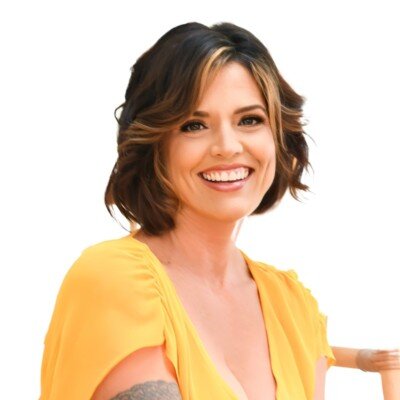
Dr. Gabrielle Pelicci
Book Coach, Ghostwriter & TEDx Speaker, The Author Club
Dr. Gabrielle Pelicci, PhD, is a TEDx speaker, three-time author, book coach, and ghostwriter, and the founder of Conscious Palm Beach and the Author Club. Her 25-year career has been anything but linear, spanning massage therapy, luxury hospitality, and higher education before she found her way to the TEDx stage and into book coaching. A lifelong storyteller, she used narrative analysis in her doctoral dissertation to study how stories create meaning. She is the author of the memoirs All This Healing Is Killing Me and The Last Ceremony, and of Now You See Me, a call to action on visibility, voice, and the courage to tell your real story. Through the Author Club's 90-day manuscript sprint, one-on-one coaching, and ghostwriting, she helps founders, entrepreneurs, and aspiring authors finally get their book out of their heads and into the world. Her TEDx talk focuses on reclaiming creativity in the age of AI.
Show full transcript
Vimala Pydi[00:00]
Good morning, afternoon, evening everyone, wherever you are. Welcome back to Her Career Unplugged. I'm your host, Vimala, and I am with my co-host, Joanne, here. And today I'm so excited to welcome Dr. Gabrielle Pelicci, a TEDx speaker, 3x author, book coach, ghostwriter, and founder of Conscious Palm Beach and the Author Club.
Vimala Pydi[00:28]
If you remember from one of our past sessions, Joanne was talking about writing a book, and we found Dr. Gabby, who is going to help us demystify and get more authors in. Dr. Gabby has spent 25 years in wellness from massage therapy to luxury hospitality to higher education to the TEDx stage. And today she helps founders, entrepreneurs, book authors who are putting it off.
Vimala Pydi[00:56]
For a long time, me and Joanne here. Her latest book, Now You See Me, is all about visibility, voice, and the courage to tell your real story. She is here today to talk about something so many women in tech specifically and beyond struggle with. Finding your voice, owning your story, and using it as a career superpower.
Vimala Pydi[01:19]
Dr. Gabby, welcome to Her Career Unplugged. So so so looking forward to hear our session and talk today.
Gabrielle Pelicci[01:27]
Thanks for having
Gabrielle Pelicci[01:28]
me. I'm so excited you guys reached out. We were able to do this.
Vimala Pydi[01:32]
Thank you.
Joanne Skiles[01:33]
Dr. Gabby, it's really exciting. Your career path also honestly is what we always talk about. Career paths aren't these linear, very textbook things that people think they are. You as Vimala mentioned, you went to massage therapy, luxury hospitality, higher education, TEDx, which honestly is like my
Joanne Skiles[01:52]
dream world for me. I would love that one day. I was gonna put that in the universe. And now but book coaching. So I love to start with the moment that changed everything. When did you realize your story needed to be told and how did writing those two memoirs reshape who you are? Not just personally and but professionally as well.
Gabrielle Pelicci[02:15]
Yeah, thanks. This is so great. I love your reference to the nonlinear path. I'm a perfect example. Constant reinvention, always reinventing myself. I feel like you you have to just to keep up with the pace, right? You guys talk a lot about technology and the rapid change of technology. It's like if you're not keeping up, it's it's really hard to stay relevant, to stay visible, to stay in the game. And so for me, story is something that's
Vimala Pydi[02:42]
Yeah.
Gabrielle Pelicci[02:42]
always been alive in me.
Gabrielle Pelicci[02:44]
A storyteller. I always have been. I've always had narration in my mind, which I didn't realize until recently is not a phenomenon that everyone has. But when I'm in various
Vimala Pydi[02:55]
Okay.
Gabrielle Pelicci[02:56]
situations and I get quiet, there's a narrator telling me the story of what's happening. So I actually decided in my graduate work to use narrative analysis in my dissertation, which is a form of looking at stories.
Gabrielle Pelicci[03:11]
What stories have in common, what themes they have in common, and then learning from that. And so that was really my deep dive on the meaning making of story, the power of story. And my memoir, I attempted it in 2007, and then I put it under the bed and I pretended it wasn't there, and then I took it back out in 2013.
Gabrielle Pelicci[03:32]
And I attempted it again and then I put it away. Then I finally took it out again during the pandemic. Many of us had some free time during the pandemic. And so finally got through it a third time, hired my team to edit and produce it. And I'm so grateful that I did. Because the ROI on a book is it's 10x in every aspect of your life, in the visibility aspect, in the confidence, in the clients, in the opportunities.
Gabrielle Pelicci[04:01]
Every single thing about my life is different after publishing my book. And then I couldn't stop. And then I just wrote another one and another one. And I ghostwrote one and I coached people because I saw the power, the true power of what our story can do for us and for our impact in the world. And that's what the TED Talk was about. It was about reclaiming creativity, especially in the age of AI and all the technology. It's like holding on to your own creativity.
Gabrielle Pelicci[04:30]
Finding your own stories, your own music, your own medicine inside of you is really what keeps us human, keeps us connected to ourself, keeps us connected to others. And so I am the hugest advocate for storytelling and book writing.
Vimala Pydi[04:46]
I actually when you said you started writing your first book and then another, then another. It reminds me of a story. I was thinking of skydiving at some point and I was talking to a coworker and she's like, It's so easy. You just go up there, open your eyes, it's like flying like a bird flying and then I'm like, She is one, she's a daredevil, she does scuba diving, she goes into the cave, she's
Vimala Pydi[05:10]
She's done everything else. And I'm like, my goodness. But with her guidance, I was able to do that. And she was right. After a few minutes of fear, it felt good. So
Gabrielle Pelicci[05:21]
Yeah.
Vimala Pydi[05:22]
it reminds me of how we can try
Joanne Skiles[05:24]
learned something new about
Joanne Skiles[05:25]
you Vimala I'm just no no I'm never I'm never skydiving like I'm just this I was
Gabrielle Pelicci[05:33]
Yeah.
Joanne Skiles[05:35]
everybody that's listening right now I learned something new and I'm horrified by what I learned just
Vimala Pydi[05:41]
We are going to talk about it offline, but the point that I'm going to make
Joanne Skiles[05:45]
Okay.
Vimala Pydi[05:46]
is just how a guide, like Dr. Gabby...
Joanne Skiles[05:49]
I j I like it. Your point is
Joanne Skiles[05:51]
once you do it once, she'll keep skydiving. And I'm like, absolutely
Gabrielle Pelicci[05:53]
Yeah.
Joanne Skiles[05:54]
not. But I do like the point. I do get it. Once you write that book, maybe maybe that's the thing. I'm gonna be honest here. I said I want to write a book. I have I have ha I have not even half books, let's say quarter books. So I have books that are so like when I said on the when I said on podcast, when I said I want to write a book, I meant my academic books. But for just,
Joanne Skiles[06:17]
Out of fun, everybody knows. I also have some really weird fantasy books that one day I hope I will write, right? So I have them halfway, maybe four chapters. I know what the ending's gonna be. But and I'm sure for a lot of our listeners it's the same way. I'm a professor, I'm a mom, I am just busy drowning in deadlines, right? So
Joanne Skiles[06:42]
How do you how how do you do this? How do you write a book so I can get addicted to writing books? Just the way people tell me I get addicted to running. That hasn't happened yet, but I'm still trying.
Gabrielle Pelicci[06:52]
The first time was definitely gonna be the hardest and the heaviest lift, right?
Vimala Pydi[06:54]
yeah.
Gabrielle Pelicci[06:56]
programming, all these tech languages, you have all these other skill sets, and that it initially there was an initial learning curve. But now that you do it, what would take me probably weeks to do, you probably do in hours, right? If I tried to learn your skill set. So writing is a craft, right? And if you enjoy the craft.
Gabrielle Pelicci[07:15]
You go learn vibe coding, right? And then you become a vibe coder, which is the path I took with writing. I am a writer and I do writing as my craft. But if you just want to put a book in the world and you don't want to become a book writer, then you use people like
Vimala Pydi[07:30]
Okay.
Gabrielle Pelicci[07:31]
me to support you. I, with my ghostwriting project, will interview the person. I'll collect
Vimala Pydi[07:36]
Okay.
Gabrielle Pelicci[07:37]
all the information. I'll write it on their behalf.
Gabrielle Pelicci[07:40]
they'll make notes and edit it and then we put it out into the world. So it takes a lot of that off your plate. Same as you would go to a vibe coder and say, I want this app built. I want it to do X, Y, and Z. Can you make me this app? Right. So there's different paths to the finish line. You can either learn to be a writer or you can use a writer to help you. And there's and there's different, options in between. So
Joanne Skiles[08:02]
Yeah, I I like it. I like that. So that makes sense. So
Vimala Pydi[08:07]
Yeah,
Joanne Skiles[08:08]
I was peeking around and I know you have the Author Club and that's like a 90-day sprint. So how does how does that work?
Gabrielle Pelicci[08:16]
So the most important factor that I found with writing is accountability,
Vimala Pydi[08:17]
And it's
Gabrielle Pelicci[08:20]
right? That that supportive accountability, not accountability to someone yelling at you to get it done, but helping you to keep going to get it done. And so the 90 day sprint is really great because the target is to complete the whole manuscript in 90 days. What does that mean? Well, a manuscript is about 50 to 70,000 words on average.
Gabrielle Pelicci[08:41]
And so then you would just break that down into your daily word count or page count. Usually it's about two pages a day, something like that. And then you would protect that time that you're gonna have that writing. So you said you have a lot going on. And I say, okay, but can you find a few hours a week that are protected, protected time, that are blocked, phones on airplane mode, you're in a cafe or a hotel room.
Vimala Pydi[09:04]
nice.
Gabrielle Pelicci[09:04]
Maya Angelou used to go to hotel rooms to write all her books, right?
Gabrielle Pelicci[09:08]
So you find a protected time, a protected space, and then you commit to completing that count. And it's unedited, right? The goal is just to get through the first manuscript and then you can fix it later, right? It's just to get everything out of your head and onto the page. So that 90-day sprint, that's exactly what it is. It's a dedicated page count and then a weekly check-in where we check in to see if you did the work and if you have any questions or you
Gabrielle Pelicci[09:37]
you need any more kind of insight about what you're writing or if you want clarity about the themes or the takeaways or the lessons or or the storytelling, right? That's what the teaching coaching aspect comes in. But at the end of the day, it's like you just gotta get it out of your head. That's the most important thing.
Joanne Skiles[09:59]
I I like that. I I've heard that advice a lot. It's like just get it out. And I'm like, great. I don't know if you guys want what's in my head out, but I I I'm like, just get it out. It's I like it. So Yes. Okay.
Gabrielle Pelicci[10:13]
Say more of that. What say more of that? What does
Gabrielle Pelicci[10:17]
that mean, about not sure? Is it that the you think it's the first draft is too messy and it might be perceived as disorganized or weird or something?
Joanne Skiles[10:26]
Yeah, I th that's definitely it. I am I and I'm sure this is true for many people. I am my worst critic. And also I'm an engineer. So I'm a very bullet point girl, which means things are super rough, and then I can go through and fluff it up. But my first draft is gonna be rough. It's gonna be rough. I'm gonna use the wrong, grammatically incorrect words,
Joanne Skiles[10:50]
When I'm flustered, well, if I say a big word, then my husband will normally joke with being like, that's a really big word for you. I'm like, thank you. I appreciate that. But that's me. So I'm very simple, direct, and I feel sometimes you read all these authors' works, they're definitely not that way. So I feel that it's gonna be it's totally mentally this head here, right? That's like it's so rough, it's gonna be embarrassing. People are gonna judge me and they're gonna be like, she wants to write a book.
Gabrielle Pelicci[11:19]
Yeah. Yeah. And that's because you're doing one of the biggest mistakes that that that we do when we start something is creating your is comparing your first draft to my finished draft. And that's like that will undermine you and sabotage you all the time. You haven't seen my first draft. I could show you my first draft. It's the worst nightmare situation, which is why it went under the bed for five years because I didn't have the courage to show it to anybody.
Gabrielle Pelicci[11:47]
And it got better, and I got coaching and I took classes and I got to a finished draft, but it took me 10 years. It doesn't have to take you 10 years. You just that messiness, what I've learned to do for myself and what I encourage other people to do is have so much fun with the messiness. If you look at kids being messy and painting on the walls, you have kids. Are they ever self-conscious about making something out of clay or
Gabrielle Pelicci[12:16]
dirt or paint or right? Are they ever
Joanne Skiles[12:19]
Right, right.
Gabrielle Pelicci[12:20]
ashamed? Are they ever worried about judgment? That's true creativity is that indulgence, uninhibited
Joanne Skiles[12:29]
Mm-hmm.
Gabrielle Pelicci[12:30]
indulgence and being messy and and letting yourself have that experience. And it's so to me now I'm like, yeah, this is bad.
Joanne Skiles[12:41]
Yeah.
Gabrielle Pelicci[12:41]
this is so bad. And I'm so happy that I get to start something new.
Joanne Skiles[12:46]
I I like that. And it's funny because I've said a very similar line to my my seven-year-old is starting to show a little bit of embarrassment with his drawings and stuff like that. And and he compares to me. And I'm like, I got 31 years on you, dude. I'm like, yes, if you want to compare my Minecraft drawing to your Minecraft drawing, that yes, now I'm drawing Minecraft pictures. Let's
Joanne Skiles[13:13]
move on with that part. I'm like, yeah, but you gotta practice and you gotta do it and you gotta work on it and and not to worry too much about where it is right now. It's the rough part. This is your first time drawing this. I I like that. I that's a very good advice that we have to remember we give that to our children. So we should probably give that advice to ourselves too.
Gabrielle Pelicci[13:36]
Yes, please,
Gabrielle Pelicci[13:38]
please do that.
Vimala Pydi[13:40]
Yeah, I I just want to double-click on one thing, Dr. Gabby, especially for people whose first language is not English and who are here and planning to write a book in English. Do you have any advice more on what Joanne was saying to you? The draft, worrying about grammar, language, using those really good words, high frequency words. What's your advice there?
Gabrielle Pelicci[14:06]
think if there's an intimidation against the language and the writing as a practice, the best solution is recording your stories. So one of the things I used to do when I was working on my books is I would take very long walks, one or two or three hours, and I would just use the voice note app on my phone and I would just talk as is as if I were talking to a friend and telling them stories. And I would just talk and tell and when you talk in conversation like we're doing now
Gabrielle Pelicci[14:35]
You ramble, you meander, it's nonlinear. You're like, that reminds me of the thing, and my kid did the thing, and and you you you don't feel the pressure to stay in between the lines or to use a certain language. And then using some different tools like Otter.ai is a great one. You can upload the audio, get the transcription, and now you have hundreds of words on the page.
Gabrielle Pelicci[15:01]
that you can craft and you can look up the proper spelling and you can have someone do a developmental editing or copy editing, but at least it's there and that's the most important thing.
Joanne Skiles[15:13]
Yeah. I like that. That's good advice there too, is the the note. And I guess that goes into AI, because I'm sure, we're at this point where AI is everywhere. Some of you all might be following the drama that is happening in the world where Substack put up a AI detector tool. And so now we got this witch hunt around the AI. There's people who are
Joanne Skiles[15:38]
you never use AI for writing and there's just so many different polar opposites. Spoiler, if you type in Word, you're probably using AI. I'm sorry to you can't really avoid AI, but that's another st another part of this. But for you specifically, you you had a TEDx talk about reclaiming creativity in the age of AI. So
Joanne Skiles[16:03]
With AI.
Gabrielle Pelicci[16:03]
I had been
Gabrielle Pelicci[16:03]
at a networking event and I had introduced myself to a woman and I had said, she said, What do you do? I said, I write books and I help people write books. And she said, you're like a human ChatGPT.
Joanne Skiles[16:15]
I I was gonna I was trying to fra I'm I'm glad she said it to you. I was trying to ask, like I'm like, so in the world of AI, like
Gabrielle Pelicci[16:19]
I was like, I
Gabrielle Pelicci[16:21]
didn't know whether like to be offended or to be like, maybe
Vimala Pydi[16:23]
Yeah, it's yeah.
Gabrielle Pelicci[16:26]
I should use that in my branding. I didn't know what, it so scrambled my brain. And I went down this rabbit hole of what is my creativity? What is my gift? What is my craft? What is it that I'm actually doing in the world? And I ended up, in my talk, I tell this story about
Gabrielle Pelicci[16:43]
I teach these writing workshops separately from people that want to write books. If you just want to explore writing as a means to process your emotions, your feelings, I get people in there that have different kinds of trauma and illness. I had a a guy that had come out of the military, had a lot of trauma, and we were doing practices of writing and meditation and writing and meditation, and he completely changed his life. It totally transformed his life. It was very healing, very powerful. And
Gabrielle Pelicci[17:11]
There are some ways that we use writing and music and art for self-actualization, for self-awareness, for just the practice of creativity. And just the practice, it's a practice of expression, of visibility, of all these things that we've been talking about, right? But then
Gabrielle Pelicci[17:37]
switching gears, using AI as a tool. Yeah, of course you can use AI as a tool, but to your point, not only Substack, but now the publishing companies are, you have to sign that you didn't use it and they're scanning for it. Now Claude is like watermarking things and putting different marks on things. We are getting and LinkedIn has a now an AI slop button or something. And
Gabrielle Pelicci[18:04]
So we are getting to the point where we're a little bit annoyed that everyone is just churning out a lot of garbage with AI. We're annoyed. It's in our you know what I mean? It's like in our like
Joanne Skiles[18:17]
Yeah, no, yeah, exactly. There
Joanne Skiles[18:18]
is so much just
Joanne Skiles[18:21]
word salad stuff going out like
Gabrielle Pelicci[18:23]
No,
Gabrielle Pelicci[18:23]
and these ChatGPT flyers and these weird animated humans and people are just like, but that doesn't mean it's not a great tool. I always once I have a draft, once I do my transcriptions and I have a draft, I'll always run it through for a copy edit. What's a copy edit? To your point, it's like, is are these things grammatically correct? Can I can I say this in a way that has a bit more clarity?
Gabrielle Pelicci[18:46]
But the content is my own. It's my own insights, my takeaway, my language, my way of expressing. And then I'm using it as a tool to smooth the edges of it in the same way that you would use sandpaper to smooth the edges of something. You're not using it to make, you're using it to support you in the creation of the the manuscript.
Joanne Skiles[19:10]
Right. Exactly. Exactly. And I don't think there's anything wrong. Granted, I'm coming from a person who what I do on Substack, I use Claude to copy edit because I am a one woman team and yeah, I'm a computer science, computer science background, not English. So I I do need someone to copy edit for me. But I don't think there's anything wrong with that because as long as the thoughts and the everything is your own, not just outsourcing.
Joanne Skiles[19:37]
To some of the AI stuff that we get that is just like, I don't know what just happened, which I think that's what we're battling right now. We're battling AI slop, which is really just slop, versus okay, assisted. This is assisted work. This is my voice refined to not, to go to Vimala's point of view, people whose English isn't their first language. If you want to write something in English, it's gonna be very tough.
Gabrielle Pelicci[20:04]
There are also humans that do this. I used
Joanne Skiles[20:06]
Yeah.
Gabrielle Pelicci[20:07]
all humans for my books to do copy editing.
Joanne Skiles[20:09]
I mean I love it. I love it. But
Joanne Skiles[20:11]
if I if I one day can afford it, I would totally use humans too. And
Gabrielle Pelicci[20:16]
There are humans that can do it.
Joanne Skiles[20:19]
and and I think probably and maybe this is my own little bias here. Probably it's better when a human uses when you use a human.
Gabrielle Pelicci[20:28]
I think so, because
Gabrielle Pelicci[20:29]
one of the phenomenons that I see, you're in Claude and these other tools, is that it tries to make everything the same as everything that everyone else is writing, right? And even if you create a project in Claude and you're like you give it your brand and you can you give it all these things, it's still it's still a limited intelligence. Whereas if you're working with a copy editor who's been editing books for 10 or 20 or 30 years.
Gabrielle Pelicci[20:56]
The nuance is different. The craft, copy editing is also a craft. It's different. And my relationship with my editor completely changed my life. She's a good friend to this day. I refer all of my clients to her once they finish their books. Her insight, because when she's going through it, she's not only going through it for copy, but she'll go through it and she'll say, if you make this one small change, this whole thing is gonna move in a different way.
Gabrielle Pelicci[21:25]
And then I would move it and I'd get chills all over my body and I'd be like, my God, it that changed it in the most... So someone someone that has that expertise also adds so much value to what you're writing. And that person is a partner in the creative process. I would I would there I would give there's no amount of money that would that would that I would
Gabrielle Pelicci[21:52]
take to break my relationship with my editor. She's just I'm serious. It's like the right editorial relationship is everything.
Joanne Skiles[22:02]
Yeah. No, I get it. Because for some reason, Claude just really wants to get rid of any of my really weird rambles. I'm like, no, my
Gabrielle Pelicci[22:07]
Mm-hmm.
Joanne Skiles[22:08]
weird rambles need to be there. It's the same way with Riverside,
Vimala Pydi[22:12]
Right. I I
Joanne Skiles[22:13]
every once in a while when I put it through and say, remove the fluff, and it's like, that's fluff right there. I'm like, no, no, that's gold. Okay.
Gabrielle Pelicci[22:20]
Yeah.
Vimala Pydi[22:22]
Right. Another thing that I I was like looking at most of these content that's online, whether it's LinkedIn, social media, substack, sometimes it looks too perfect.
Vimala Pydi[22:33]
I think you're losing that originality that as Joanne was just saying, having that weird components reflects on how you're thinking, what your originality is. Right. It just looks too perfect sometimes. So I was using AI a lot, that's what we do day to day, but I'm trying to use my own words to write than using AI because it shows it reflects my voice, myself.
Vimala Pydi[23:01]
as well even if there are some imperfections that's okay I want it to come come out that way right
Joanne Skiles[23:08]
But I want to say,
Joanne Skiles[23:09]
I'm no way anti-AI for anybody that is like here and listening. It is great. I use it really a lot for coding. Mostly because I have all the years of coding experience. So if I can tell it to do something and I double check it, it looks right. It's fine. I can move
Gabrielle Pelicci[23:24]
Honestly.
Joanne Skiles[23:25]
on. Saves a lot of time. It also helps when you are a one woman, two woman show like Vimala and I is we are not.
Joanne Skiles[23:35]
marketing experts, we don't make money off of this show, nor is it the goal too. So we are going to subsidize where we can to make sure that one, we're doing enough with marketing, but we're not marketing champs. So yeah, we are going to subsidize with AI. And I don't think there's anything wrong there to do that. If one day we somehow start making a bunch of money, we'll hire someone, okay? Mark my words, okay.
Gabrielle Pelicci[23:59]
Mel Robbins has fifty people on her podcast team, she just
Vimala Pydi[24:00]
Love it.
Gabrielle Pelicci[24:03]
said the other day.
Joanne Skiles[24:04]
Yeah. All right. So we talked about AI talked about we talked about writing a book. So I d I wanna respect your t everybody's time. We're gonna hand over to Vimala soon for rapid fire, but before that.
Joanne Skiles[24:18]
There's me, there's people probably driving home listening to this podcast right now and they're like, maybe I do have a story worth telling. So what's one step they can take this week to start? What should I do?
Gabrielle Pelicci[24:32]
think that it has to be grounded in something purposeful, the premise, what's your why? What's your why? Specifically for women in tech, we're still playing catch up to the guys, right? That's one of the reasons why you wanted to make this. If you're a woman in tech and you are even remotely interested, passionate, enthusiastic about equity, about equality, about women in
Gabrielle Pelicci[25:00]
moving more into leadership, ownership, raising money, having their own ventures, anything like that. If you ground into that as your purpose, you're gonna find the time to write. Because there are very few things that have the power that a book has.
Gabrielle Pelicci[25:21]
To get you on stages, to get you leadership positions, to get you recognition, to get you opportunities, to get you funding. There are very few things that have the power that a book has. And there's just so much noise. And you can see apps and you can see ads and you can see YouTube videos and you you can see all this, but very few things has the the
Gabrielle Pelicci[25:47]
durability, the respectability, the the status of putting your ideas into a book. And I think it's always gonna be like that. I think there was a little bit of what will become of books? And it's like, I think books are gonna become more important. Because if you have the capacity to hold all of that knowledge and communicate all of that knowledge, we are gonna trust you. After you put down someone's book, you trust them and it
Gabrielle Pelicci[26:14]
We're in an attention economy. If you can hold someone's attention for six, eight, ten hours, you've just built a real relationship with somebody that you're not getting in a seven second scroll. So I continue to think that if you can ground into your why and you can recognize not only opportunity for you, but the opportunity for the collective, like women as a collective, what that can do to advance us.
Gabrielle Pelicci[26:41]
I think grounding into that will give you a bit more motivation to move into some of those other other things we discussed about scheduling and accountability and the mechanics of it.
Joanne Skiles[26:56]
All right. So if you're thinking right now that you have a story worth telling, it's first
Gabrielle Pelicci[27:06]
What's your why?
Joanne Skiles[27:06]
what's your why? Yeah. So this week, take some time, figure out what your why is. Yeah.
Gabrielle Pelicci[27:12]
What's your why? You want
Gabrielle Pelicci[27:13]
more clients? You want more opportunities? Do you wanna call out some shit that you've seen that's unacceptable? What's your why? What's the what's your why?
Joanne Skiles[27:23]
that makes sense. I I I like that a lot. Yeah.
Gabrielle Pelicci[27:27]
do you you mentioned you have a son? You have more than one kid? You have two boys. How do you
Joanne Skiles[27:29]
Yes, I have two boys. I have a seven and a five year old.
Gabrielle Pelicci[27:33]
how do you want them to see women in the workplace? What matters to you as a mom about how your boys perceive women who are working? Give me like a
Joanne Skiles[27:46]
To me, I just want to me, I'm my modeling and my example is that we also are there. Not so much that they need to to shy away from us, right? But to know that our place is also there. And it that's just as important. My my kids have always known me as working to the point that it's gonna probably sound horrible, but I'll have it recorded on this podcast. Is my husband cleans the house. I don't clean the house.
Joanne Skiles[28:14]
There is not a gender typical norm in our household. And so, actually to them, they're like, well, daddy cleans. Mommy makes the mess. And I I think I think that's really what I want to understand. There's not really gender roles and gender specific things and that women belong in just as many places as men belong. And that's really
Gabrielle Pelicci[28:36]
Awesome.
Joanne Skiles[28:37]
important for me.
Gabrielle Pelicci[28:38]
And is there anything professionally, you mentioned the TED Talk. Is there anything else like that that you would really like to accomplish in your career?
Joanne Skiles[28:45]
In my career? My gosh, this is so much pressure here. So TEDx talk is definitely long, long goal there. I would love to do a TED Talk. Keynote speaking at technical conferences is another thing that I really have as a long goal. And then I guess really would be more I speak a lot at conferences, as people know, more paid speaker moments would be great.
Gabrielle Pelicci[29:10]
So what if I could tell you that twelve months from now you could have a book and eighteen months from now you could give a TED Talk and twenty-four months from now you could be making between fifteen and twenty thousand dollars per keynote?
Joanne Skiles[29:24]
I would I would be like, sign me up, what is this?
Gabrielle Pelicci[29:26]
That's literally the trajectory. It's literally,
Vimala Pydi[29:27]
That's it, Joanne. Come on.
Gabrielle Pelicci[29:31]
literally the trajectory. It's literally the trajectory. That that's not even I'm not even talking about how do we how do we live on Mars? I'm talking about you spend a year. It's like three months all in on the writing, another three months of editing, and then another six months of production. You apply to TED Talks. I can tell you how to do that.
Gabrielle Pelicci[29:53]
You're on stage 18 months from now. You package your book and your TED Talk into a speaker package that gets distributed to the conferences with a price tag. And now two years from now you're paid to speak. It's like, that's the playbook. That's what we're doing.
Joanne Skiles[30:09]
That's great, but
Gabrielle Pelicci[30:10]
That's what thought leadership is. And then you might find that you're not having to do the grind and the hustle as much because now you're bringing in an extra twenty thousand dollars a month giving talks.
Gabrielle Pelicci[30:22]
so you might not have to grind so hard on the the programming or these other things that you're saying, I'm the one woman show. Now maybe you're hiring some people to take some of that off of you.
Joanne Skiles[30:31]
Exactly.
Joanne Skiles[30:32]
Exactly. Because that would be the nice thing is with that. Yeah, I
Gabrielle Pelicci[30:35]
No, but this is the this is not like this is a real thing that we're doing. Women are doing this. This is
Joanne Skiles[30:41]
I I'm I love it. I'm now I'm getting nervous. I like that. Okay. All right. All right.
Gabrielle Pelicci[30:46]
this is a real thing that we're doing.
Joanne Skiles[30:49]
Fine. You know what? Everybody hears it right now. I'm like, you know what? Fine. Yes.
Vimala Pydi[30:55]
I think that's
Gabrielle Pelicci[30:55]
If you don't like money,
Gabrielle Pelicci[30:56]
I don't know, maybe you don't like money. Maybe it's
Joanne Skiles[30:57]
I am, I am a capitalist
Joanne Skiles[31:00]
at heart.
Gabrielle Pelicci[31:03]
Some women are like, I don't like money. I'm like, I don't I I'm sorry, I don't know what to talk about.
Joanne Skiles[31:07]
I d I don't know. That's that's that's a pretty
Joanne Skiles[31:10]
good motivator for me. That's horrible to say that.
Vimala Pydi[31:14]
No, it's not.
Gabrielle Pelicci[31:14]
I guarantee you, I guarantee you, I guarantee you, if you locked
Gabrielle Pelicci[31:19]
in right now, that's what would happen over the next 24
Joanne Skiles[31:21]
Okay.
Gabrielle Pelicci[31:21]
months. I guarantee you. Not a doubt in my mind. Not a doubt in my mind. It's an e it's like the it's it's so it's so I don't want to say common, but the path is the path is there. You don't have to take a machete.
Gabrielle Pelicci[31:37]
and go through the Amazon jungle. The path is there and there are people like me that can support you to just go step one, two, three, four, five,
Joanne Skiles[31:46]
Good. All right. I guess you know
Gabrielle Pelicci[31:48]
Mm-hmm.
Joanne Skiles[31:48]
what? I never really thought that the path really I know those points, right? But I've never really thought about what the playbook is for that. It's ironic when we're ho holding a show around career playbooks, but I've never actually thought about my next part of my playbook. And so it is interesting, being shown right here. You guys get to see it in real time, is me getting shown the next playbook.
Joanne Skiles[32:12]
I'm like, this is the next step. My God, it's happening right now. This is the next step. Okay.
Gabrielle Pelicci[32:17]
Yeah.
Gabrielle Pelicci[32:18]
And to connect one more dot in case it's not connected. The whole point of the book, right, is for you to refine your
Gabrielle Pelicci[32:27]
idea worth spreading, right? That whole process, those hundreds of pages, is your refinement of getting it down to that idea that becomes the idea that you talk about, that becomes the thing that people hire you to talk about, right? So the through line is you doing that process of.
Gabrielle Pelicci[32:47]
It it's like making the cake, And then giving the cake and then selling the cake.
Joanne Skiles[32:53]
Exactly. Okay. Yeah. And then for those that listen, my whole thing is practical engineering. You learn from doing practical things. So that would be the book. The book is like one example of a project that you can do to learn end to end to understand AWS really. Right? So okay. It's very educating.
Gabrielle Pelicci[33:12]
And then you
Gabrielle Pelicci[33:13]
give the TED Talk. In the TED Talk, you can't talk about branded things. So
Joanne Skiles[33:16]
Right.
Gabrielle Pelicci[33:16]
you have to find what is some idea in there that's a non branded or or platform specific idea that is applicable to anybody. That's like something like, that's interesting, that's applicable. And then you take that. And then when you go out and give the talks, the paid talks, you can tweak it if you want to do more AWS or what have you.
Gabrielle Pelicci[33:40]
But for the main stage, you want to feel like anybody in the audience. If I'm sitting in the audience, I get value takeaway from that. And that's good to keep in mind, even if you're writing about AWS, because you want the book to be accessible. You want it to be something that even if someone is just
Gabrielle Pelicci[33:59]
curious that they're gonna be able to, have a takeaway from the writing as well. And so I'm always asking people when they start coaching with me, what's the end goal? Is the end goal the keynotes? Like you said, all right, then we need to start the book with the end in mind.
Joanne Skiles[34:12]
Yes.
Joanne Skiles[34:13]
Very yes. I like that. Okay. All right. Well, I now have a mini existential crisis happening. So I'm gonna hand it over to Vimala to do rapid fire.
Vimala Pydi[34:27]
Thank you so much. I am so glad I was not interviewing today. And it's Joanne who has to put her thoughts out in the mind. So let's go, Joanne. August 13, 2027. We are going to look for the book release. All right. So going into rapid fire, Dr. Gabby, that was so awesome what you did and the last few minutes. Motivating. And there are a few thoughts that was going on on my mind too, my book.
Vimala Pydi[34:55]
AI is one area and the career, the podcast, we can bring a book to help women on their careers too. So I have two books in thoughts, so I'm putting it in the universe as well. All right, let's go to the next session, the very fun one, a rapid fire. We're going to go with short answers. If you feel anything that where you would give us more insights, feel free to do that as well. So are you ready? All right.
Gabrielle Pelicci[35:20]
Yes, I'm ready.
Vimala Pydi[35:22]
So the first question as you are into books and might have read a lot of books, one book every woman should read.
Gabrielle Pelicci[35:31]
gosh, mine. Obviously. You could take
Gabrielle Pelicci[35:36]
your pick. These are the first two. All This Healing Is Killing Me and The Last Ceremony.
Vimala Pydi[35:38]
Well it's not even
Gabrielle Pelicci[35:41]
But honestly, the most recent one that I wrote, Now You See Me, it's an easy read. It's 20,000 words, about 50 pages. You could get through it easily a couple hours. And it's what I was just doing with Joanne. It's this like
Gabrielle Pelicci[35:57]
Call to action. You should tell your story. Please tell your story. Yeah.
Vimala Pydi[36:03]
Love it. Now You See Me. I'm going to get mine too. Okay.
Vimala Pydi[36:07]
Okay. Do you want to repeat the names of the other two books?
Gabrielle Pelicci[36:10]
yeah, sure.
Gabrielle Pelicci[36:10]
So I my genre is memoir, which there's nothing techie about memoir. Memoir
Vimala Pydi[36:15]
Yeah.
Gabrielle Pelicci[36:16]
is personal storytelling of personal experiences that you had. So my first one was called All This Healing Is Killing Me. And the second one's called The Last Ceremony. There's a lot of travel, there's a lot of adventure, there's a lot of healing, transformation, a lot of stuff around relationships, specifically with family and romantic partners, things like that.
Gabrielle Pelicci[36:39]
and so those are more more emotional journey stories. Whereas the most recent one that I mentioned, Now You See Me, it's more I don't wanna say self help, but it's in the genre of self motivating with some personal storytelling.
Vimala Pydi[36:56]
Awesome. Yeah, thank you. Thank you for sharing. Next
Gabrielle Pelicci[36:58]
Yeah.
Vimala Pydi[36:59]
question, best advice you ever received.
Gabrielle Pelicci[37:03]
Write to one person. So we think of the
Gabrielle Pelicci[37:05]
audience, we think of the stage, we think of the followers, we think of a whole room. That's not who you're writing to. You're writing to one person, one person. So if Joanne was writing, she would only think of you, or she would only think of me, and she would write to that one person. And what it does is it creates an intimacy in the writing that makes every person that pick up the book feel like you're talking to me. You're speaking to me.
Gabrielle Pelicci[37:32]
And it's the best thing that I ever learned about writing.
Vimala Pydi[37:34]
Yeah, that's a great advice actually for everyone. Biggest myth about writing a book. Okay.
Gabrielle Pelicci[37:40]
That it's hard. It doesn't have to be hard. It doesn't you can sit there like I did for 10 years
Gabrielle Pelicci[37:48]
being scared and being insecure and being all the things. You can, you can do that. But it doesn't have to be hard. You can get in a writing group with a bunch of people that love you unconditionally. And you can get a coach like me or someone else and you can just do the thing. You could just do it. It doesn't have to be hard.
Vimala Pydi[38:08]
Right? Okay. Next one, you did talk about journaling and voice memos. Which one is your favorite? Journaling or voice memos?
Gabrielle Pelicci[38:17]
I I just think voice memos are so easy 'cause I can do it in the car, when I'm driving. I can do it when I'm walking. I c when I have an idea and I don't wanna lose it, it's just so easy to to just record myself. I I do it almost every day.
Vimala Pydi[38:34]
Okay. If you could go back and tell younger Gabby one thing, what would that be?
Gabrielle Pelicci[38:41]
Just do it.
Gabrielle Pelicci[38:42]
there's nothing to be scared of. Why are you scared? Don't be scared. Yeah, like less less fear.
Vimala Pydi[38:48]
All right, bring it to the last
Vimala Pydi[38:51]
one. What are you manifesting right now?
Gabrielle Pelicci[38:55]
I'm scaling my writing
Vimala Pydi[38:56]
Right.
Gabrielle Pelicci[38:57]
program. So I'm bringing in partners to build out community and all the infrastructure so that I can serve a lot more people. Because to Joanne's point, when you're just one person, I can have a few clients at a time. So I'm really I'm gonna scale this so that I can serve a lot more people.
Vimala Pydi[39:15]
Awesome. Sounds good. That's a wrap. Thank you so much. It has been such a pleasure having you on the show. And it moved both of us too. This never happens, right? Like we really
Joanne Skiles[39:25]
Wait.
Vimala Pydi[39:26]
had to go in and think about the playbook. So thank you so much for that small session that you had right there. So if you are listening, this is for all listeners, and if you have been sitting on a story, a book idea or a message.
Vimala Pydi[39:41]
the world needs to hear, let this be your sign. Connect with Dr. Gabby on LinkedIn and we will post your website as well in the description and also check out the Author Club. And remember, the story I'm most afraid to tell might be the one someone else has been waiting to read.
Vimala Pydi[40:02]
So please do thank you so much again, Dr. Gabby. Please do subscribe to our YouTube channel or your favorite platform. You can find it on Her Career Unplugged. If you love our show, please, please, please go ahead and review us. We are eagerly waiting for those reviews. Feel some love there. So until next time, thank you for being here. Stay bold, stay real, write your stories and stay unplugged.