
From Invisible to Award-Winning: Bry Bird's Visibility Strategy for Neurodivergent Founders
with Bry Bird
About this episode
Ever feel like your work should speak for itself, but somehow no one's listening? In this episode of Her Career Unplugged, Joanne and Vimala sit down with Bry Bird (an award-winning, neurodivergent creative strategist based in Essex, England) who used to feel invisible in her industry too, until she stopped trying to blend in and started treating her personal brand like the business it actually is. Bry breaks down how she went from invisible to multiple award wins in a matter of months, why brand, website, and social media are one interconnected ecosystem rather than three separate things, how she's turned her neurodivergence into a strategic advantage, and why she keeps AI out of her creative process. If you've ever wondered whether visibility is worth the effort, or you've been quietly building without seeing results, this episode is your playbook.
Watch
Show notes
- Bry's turning point: from feeling invisible and overly polished to a complete rebrand, bringing back color, personality, and her neurodivergence into her brand.
- What Bry actually does for small businesses as a marketer, designer, and strategist who diagnoses what's really holding a brand back.
- The two to three moves that took Bry from invisible to multiple award wins in a matter of months, and how listeners can replicate the same research-driven approach.
- Why brand, website, and social media aren't three separate things; they're one ecosystem, with your website as the hub and social media as the engine driving traffic to it.
- Neurodivergence as a strategic advantage: pattern recognition, attention to detail, and zooming in and out between the small details and the whole picture.
- What to do when you're posting consistently but feel like no one's paying attention, and why saves and shares matter more than likes and follows.
- Why Bry keeps AI out of her creative process with clients, and the intellectual property risks of AI-generated logos and content.
- Why you should start entering awards earlier than you think; a shortlist alone brings credibility and networking opportunities.
- Rapid fire: one word for her brand (human), the biggest career myth women need to stop believing, and the best investment she's made in herself (rest, and being kind to herself).
About the guest
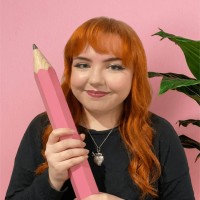
Bry Bird
Founder & Creative Strategist, Hi This Is Bry
Bry Bird is a neurodivergent, award-winning creative strategist based in Essex, England, and the founder of Hi This Is Bry. After years of feeling invisible in her industry, she rebuilt her personal brand around what actually made her valuable (her strategic thinking, curiosity, and neurodivergence) and used the same strategy she teaches clients to go from unnoticed to shortlisted for multiple business awards, including the East of England Startup Awards, in a matter of months. She works with small business owners as a marketer, designer, and brand strategist, diagnosing what's holding a brand back across website, social media, and positioning.
Show full transcript
Joanne Skiles[00:00]
Hi, everybody, welcome back to Her Career Unplugged, the show where you build your own career playbook. I'm your host, Joanne Skiles, and I'm joined again with my co-host, Vimala. And today I'm really excited to introduce you to Bry Bird, a neurodivergent. And award-winning creative strategist from Essex, England. Yes, from across the pond. Bry turned years of feeling invisible to winning awards, landing press features, and building a thriving business all in a matter of months. She didn't get lucky, she got strategic. And that's really important that we all understand. So let's break down exactly how visibility works and why it's non-negotiable for our careers. Bry, thank you so much for being here today. And
Bry Bird[00:47]
Yeah, th— yeah, thank you for having me. I'm so excited.
Joanne Skiles[00:50]
I'm just really happy
Vimala Pydi[00:51]
Yeah, so
Joanne Skiles[00:51]
to have you here and I'm gonna save myself for the end where the rapid fire is, where we get a little spicy. But before that, I'm gonna hand you over to Vimala, who's gonna ask you a bunch of questions and as everybody knows I might chime in at some point. So Vimala,
Vimala Pydi[01:05]
Yes.
Joanne Skiles[01:06]
take it away.
Vimala Pydi[01:07]
Thank you so much. So a huge pat on our back that we are going outside US and we have our first guest, international guest. Bry, thank you so much for joining us today. And what a tremendous journey. I'm really curious as we go in, talk about your journey, really curious on how you were able to achieve the highest awards. I think Young Entrepreneur is one of the awards that I've seen. In a short span short span of time using your strategy. So let's dive in. To begin with, I've seen you openly talk about feeling completely invisible in your industry. What was that first turning point where you decided to stop trying to fit in and start start showing up as yourself?
Bry Bird[02:01]
Yeah, for a long time and when I first started my business I thought that I had to look like every other designer, every other marketer and fit a particular image. I tried to be overly polished and overly professional and I just ended up blending into the background and I also didn't enjoy working on my actual business and I wasn't attracting the type of clients I like to work with. And that was my turning point when I realized after some reflection and digging back into strategy that I was hiding the things that I offer that make me valuable. I was hiding my strategic thinking and my curiosity and also my neurodivergence as well because we do notice things differently and I definitely do. And we were also conscious about accessibility, which is important. so I started talk talking more openly about things that actually mattered to me and I started showing up as myself. I did a complete rebrand. I brought back in colour before it was very kind of muted and now it's black and pink and sparkly and People started remembering me and approaching me saying, I love your brand, I love what you talk about, I love that you talk openly about neurodivergence and running a business. So that was my turning point.
Vimala Pydi[03:37]
Awesome. Yeah, can you just talk us on what you do for small businesses? When I was just curious on once you switched, what do you do for small businesses and what were the changes? Like as you said, you changed it to have like some color and bring in the brand. yeah.
Bry Bird[03:57]
Yeah. Do you mean in terms of my kind of services, what I offer? Yeah. Okay,
Vimala Pydi[04:01]
Yeah, yes.
Bry Bird[04:03]
yeah, sure. I am a marketer slash designer, but I'm more of a strategist. I look at people's businesses across the board, the entire business. I look at their social media, I look at their website and I look at their brand and positioning as well. And I'm a diagnoser. I identify problems and things out of bottlenecking inquiries and successful the business owner and I feed that back in a really honest but gentle and open and transparent way. There's no kind of marketing jargon. It's just here's what works and why. I really value providing that transparency.
Vimala Pydi[04:53]
Awesome. Yeah, I think when we first spoke or connected, that was something I felt which would also be applicable for our audience who are in
Bry Bird[05:02]
Yeah.
Vimala Pydi[05:03]
their careers and have visibility online, whether it's LinkedIn, whether you're creating your own websites, like how can you use some of the strategies Bry is going to talk to us about in your own career? So that was thank you for kind of giving us an overview. my next one would be like. strategy overlap you went from like invisible to multiple award wins in few months that's the key right like as Joanne said in few months what were the two to three moves that changed everything on and how can our listeners replicate it in their own careers?
Bry Bird[05:43]
Yeah, so the awards I did a lot of research into the kind of companies that were already winning awards and I'm like what do they do very well and what can I do to learn from that but also differentiate myself and I learned that judges they they look at your business as a whole. They're not looking at one part of it. Someone might have amazing values in their business or deliver a really great service, but judges are looking to invest in a business. An award is an investment. It's an investment of trust and so that they're looking for signals that you're credible. So if your social media is a bit of a a mess or kind of off brand voice they're going to notice that if your website doesn't look professional you might miss an opportunity versus someone who's got all these aspects figured out they figured out their positioning their tone of voice their branding their visuals so it's getting more competitive and that's what I've done for myself in my business. How can I learn from all this? How can I use strategy to differentiate myself and so that that that has paid off. That's paid off with the awards and my clients come back to me and they go, my gosh, what a difference. I'm actually attracting the right people. I got shortlisted for an award. So yeah, strategy just changed the game.
Joanne Skiles[07:26]
I like it because you're saying you took the strategy that you give to your clients and applied it on yourself, right?
Bry Bird[07:30]
Yeah. Yeah, absolutely. I'm proof of my own process. Everything
Joanne Skiles[07:36]
Yeah.
Bry Bird[07:36]
that I recommend to my clients I do myself. So I'm not just kind of throwing marketing theories at my clients. These are true and tested theories. I've I recommend the awards that I've entered. I don't I don't mind a bit of competition in that in that sense. So yeah, I recommend awards to other designers as well. Yeah, I don't I don't really gatekeep.
Joanne Skiles[08:01]
I like it because
Vimala Pydi[08:01]
All right.
Joanne Skiles[08:02]
you can use yourself as a case study of why it's successful. I mean
Bry Bird[08:04]
Yeah, yeah.
Joanne Skiles[08:06]
it's a very good, very nice. Yeah. And I mean your personal
Vimala Pydi[08:07]
Right.
Joanne Skiles[08:10]
brand, like for those listening, like your personal brand is also a business in a way.
Bry Bird[08:16]
Yeah.
Joanne Skiles[08:16]
You have to approach it in that mindset. And it's very hard because it's personal, so it's hard for us
Bry Bird[08:21]
Yeah.
Joanne Skiles[08:22]
to remove it, but it is also something that is very important. I'm not that good at my personal brand, but you know, we do it.
Bry Bird[08:28]
Yeah, yeah.
Vimala Pydi[08:29]
We learn, we are going to learn, right? Yeah. That's
Joanne Skiles[08:30]
Yeah.
Vimala Pydi[08:31]
exactly what got me curious when we all connected. just treating your career as our business and using your strategies. definitely strategy over luck would help us moving our careers to you. that actually that gives brings us to that next question. You say brand, website, social media aren't three separate things. They are one ecosystem.
Vimala Pydi[08:58]
Can you break down for someone who's been treating them as separate? Like can you help us kind of change or shift our mental model to think of all these as one ecosystem?
Bry Bird[09:12]
Yeah, absolutely. So I start with the brand usually. That's what I recommend to my clients as a first kind of point of call, so the first thing to look at, because it's what makes people remember you and your positioning is very important because it allows you to attract the type of clients that you want to attract, whether that's clients who share your values or high value clients, branding is that. Foundation that everything else is built on, and your website gives them the confidence to buy. That's where you put your social proof, that's where you share that you are the absolute expert in your industry, and you show things like your testimonials, your award wins. That's your hub that kind of holds your brand. Your brand shows up across many places. But your website is kind of the heart of it. It holds everything. And then your social media is the engine that keeps driving traffic to your website back to your brand. So they all link together and they all work together.
Vimala Pydi[10:27]
Yeah, yeah. A and we can attest to that as well, Joanne and I when start when we started this podcast as a non it's a non profit, definitely free for all of our listeners, as giving
Bry Bird[10:39]
Yeah.
Vimala Pydi[10:39]
back to the community. But then we realized if we have to have that outreach, we need to bring everything together, post on LinkedIn, Spotify, also on YouTube and we kind of try to put in some reels on Instagram. holistically embraces the viewers. So totally attest to that. That's that's a great way to look at your business or a career. Like look at all the faces that is helping you.
Joanne Skiles[11:06]
Yes. And even when it's
Bry Bird[11:07]
Yeah, exactly.
Joanne Skiles[11:08]
a even when it's a non profit, community driven environment with creating it all, it's still a lot of work and but it it's rewarding,
Vimala Pydi[11:17]
A lot of yeah.
Joanne Skiles[11:19]
right? But but I think it's mind boggling when you're well for me, I'm just a software engineer. So thinking about the whole world of marketing, it was like a fish out of water.
Vimala Pydi[11:29]
Yes.
Bry Bird[11:30]
We have.
Vimala Pydi[11:30]
Yeah. True, yeah. yeah, you have shared that your curiosity became strategy, your obsession became expertise, and your eye for detail made your career. And you also talked to us about neurodivergence. What does that mean? on when you say neuro neurodivergence, and how can you help from your expertise? How can you help other neurodivergent founders out there.
Bry Bird[12:01]
Yeah, that is a really great question. I suppose when I was working a typical nine to five, I worked in marketing agencies and design agencies and in-house as a designer, I would notice details that were maybe overlooked. by other members of the team. I I was kind of the the stick in the mud because it the focus sometimes in marketing is like we need to update the the website and I'm going, well actually hang on, the content's not up to it or the branding, you know, that foundation isn't solid yet. So I think a lot of people I speak to who are neurodivergent they relate to that. They relate to that kind of focus on detail and and seeing kind of the whole picture together and also feeling maybe like so to speak as a stick in the mud like I did but it's really really helpful in my business because business owners they need someone who can spot this if you're running your own business you're just too close to it and People who are neurodivergent, again, this isn't everyone, I'm speaking for myself, and it's a kind of a common trait. A lot of us are really good at things like pattern recognition, and that's what branding is really. It's showing up consistently in the same places across your socials and on your website or Spotify, etc. It's noticing when something is off-brand or not quite right. And being very insistent that it it needs it needs a little bit of a tweak, that it is important. These small details are important. They're a part of the bigger picture.
Vimala Pydi[13:58]
Got it. So it's like attention to the detail and do you look for perfection as well
Bry Bird[14:05]
Yeah.
Vimala Pydi[14:06]
would that actually sometimes when you're hustling and for us too, like we do have a lot of podcast branding that we work with and we try
Bry Bird[14:17]
Yeah.
Vimala Pydi[14:17]
to release, would that be a challenge for you at any time when you're trying to like really look at Everything, all the layers when you're posting,
Bry Bird[14:28]
Yeah.
Vimala Pydi[14:29]
do you think it's a challenge or is it the way you work?
Bry Bird[14:34]
Yeah, I I definitely have developed my own kind of checklists and systems but I'd say I'm really good at zooming in and out. I start with the small kind of details first. I had someone recently ask me what do you notice first when you jump on a website and that's quite difficult to answer because I'm looking at the website as a whole. Does it communicate what you do in five seconds or less? But I'm also looking at those small details as well. So I think It's about kind of zooming in and out and knowing when to do that. That's I offer clarity reports as a service, and that is a huge part of my process in that it's like checking everything is perfect in isolation, but then also does the whole picture work, does the entire customer journey work? So it's
Vimala Pydi[15:34]
All right.
Bry Bird[15:34]
about that adaptability.
Joanne Skiles[15:36]
Yeah. I I
Vimala Pydi[15:36]
Yes.
Joanne Skiles[15:37]
I like it. So you can focus really detailed. so I have ADHD. So I I tend to go through back and forth that way and then I'll get really focused sometimes. So
Bry Bird[15:47]
Mm.
Joanne Skiles[15:47]
I might manic and then the really, really focused moments where I'll come in and then my husband loves those moments. But I mean I joke and I say to myself is that I use mine as my superpower. So my superpower being able to juggle back and forth. People ask me, how do you do 20 things at the same time? Like, you know, that's my superpower. But it's a
Bry Bird[16:04]
Yeah, exactly. It's
Vimala Pydi[16:05]
Yeah. Yeah. Find your superpowers, right? Yeah.
Joanne Skiles[16:09]
it's a superpower in a way. It's also exhausting a little bit. So but
Bry Bird[16:12]
Yeah, gosh, absolutely can absolutely be exhausting. kind of taking in all these details and then the whole picture, my goodness. But I suppose my advice to people who are neurodivergent, lean into what you know you are good at. I I'm going to be completely different. If you've met one autistic person, they say you've met one autistic person or person with ADHD, we're all different. But that that's
Joanne Skiles[16:38]
Yes, we are.
Vimala Pydi[16:39]
Right.
Bry Bird[16:40]
the key thing. We are different and our brains and notice things and work in different ways that others might not. So lean into it. Don't be afraid to see if you can kind of make a system out of it. that's kind of what I do.
Joanne Skiles[16:57]
I like it 'cause that's kind of my way. And then the same way is that I can notice when I'm getting into one of my spiraling states. So I always
Bry Bird[17:06]
Yeah.
Joanne Skiles[17:06]
kinda say I can kind of feel it building up. Sometimes I don't know it. And my husband can tell and he kind of gives me a heads up that I'm starting to spiral. So it's good recognizing the signs when it happens. But yeah. I would say I embrace
Bry Bird[17:20]
Yeah, no, exactly.
Joanne Skiles[17:22]
it. I embrace it and don't go away from it. And that's who I am.
Bry Bird[17:25]
Yeah, no,
Vimala Pydi[17:25]
Sure.
Bry Bird[17:25]
exactly, exactly. that that's just made just made me think of the fact that my services are actually built around not just what's in demand and what business owners need, but what I am personally good at, which is the strategy, the deep research, the pattern recognition, and asking a lot of questions. So if you are neurodivergent or or if you're not and you know that you like to work a particular way or something kind of lights your brain up, you could maybe link that to your services, make it a part of your process. And I find my business a lot more enjoyable to run since I've done that and since I've accepted how my brain works.
Joanne Skiles[18:14]
And I like it. That's the advice. Like,
Vimala Pydi[18:15]
Okay.
Joanne Skiles[18:16]
you know, you find something that you love and you if you can apply that
Bry Bird[18:19]
Exactly.
Joanne Skiles[18:19]
to your work, you're gonna like your work. So I think that's true for
Vimala Pydi[18:22]
You enjoyed the books, yes.
Bry Bird[18:22]
Exactly.
Joanne Skiles[18:25]
anybody, whether or not you're neurodivergent. So you don't need
Vimala Pydi[18:29]
Yes.
Joanne Skiles[18:29]
to have ADHD like me to to have that truth, right? So I think that's I love that.
Vimala Pydi[18:36]
Yeah, definitely. Find your superpower and stick to it. I think that's the message. that way you would enjoy it more. All right, going into the next one. I chuckle asking this question because I do that too. You talk about people secretly watching for months before they buy. I do that for a lot of my the products I buy. What advice would you give to someone who is posting consistently? But feeling like no one's paying attention.
Bry Bird[19:09]
Yes, that is such a common thing. I every business owner I speak to, they're like, people tell me they love my content but they haven't engaged. Everyone's had that happen to them. I would say, look at what's happening behind the scenes. Don't just look at likes and follows. Look if people are saving your content and resharing your content. And algorithms are moving to prioritize those signals. Anyway, if lots of people are saving and sharing your content, that indicates to the algorithms that your content is worth someone's time and what content that's worth coming back to as well. But also look at your analytics if you've linked to a website. Look and see if you get more website hits after posting. I'd say focus more on making content that you feel is valuable to your audience, but you also enjoy making. So even if only a few people engage, you're still building a connection with those people, and it's it's not a waste because you've enjoyed talking about that subject as well. I'd say don't kind of bother with algorithm hacks or I I see I see so many kind of random tips on Instagram and TikTok all the time and I look at it and I think, gosh, that doesn't work But they get they get high engagement because it's a nice kind of easy quick win. But there's no shortcut to building and connecting with an audience. That is just something that naturally happens over time.
Vimala Pydi[20:51]
Being consistent, okay. And also like kind of the point is if you you have like a lot of data analytics, sometimes you
Bry Bird[20:59]
Hmm.
Vimala Pydi[20:59]
see the post impressions as well. They may not like it, but you'll see that there is a huge engagement through post impressions, which means people looked at your post. that's a great advice, right? Just be consistent, do what you love, post what you love, and the results will come.
Bry Bird[21:19]
Exactly.
Vimala Pydi[21:19]
Anything else you want to add, Joanne or Bry, to that?
Joanne Skiles[21:22]
I was thinking that also just going back to those Instagram, TikTok advice on like how do you get the engagement and all that,
Bry Bird[21:30]
Mm.
Joanne Skiles[21:30]
gotta remember that their entire business is selling that business to you.
Bry Bird[21:34]
Yes.
Joanne Skiles[21:36]
So
Vimala Pydi[21:37]
True. Great point.
Bry Bird[21:40]
Yeah, exactly.
Joanne Skiles[21:40]
Like my biggest my biggest pet peeve and the thing that I try to do is fix all my algorithms so I don't see those posts. That's
Bry Bird[21:47]
Yes, that's the best thing you can do. And genuinely, god, there's all these hacks about how to get more followers or more likes. The secret is make content that is helpful and earns likes and earns follows. What are you sharing that people will want to come back to? It's harder to get people to follow now because a lot of trust has been lost in marketing.
Joanne Skiles[22:11]
Yes.
Bry Bird[22:13]
So you really need to kind of show up consistently and give people a reason to keep coming back to you to invest in you. A follow is an investment and explaining that concept to my clients has really changed their mindset around it. So if something doesn't go according to plan, they they they understand why. they go, actually maybe this didn't provide the value that I thought it did. And then we kind of pivot into something else.
Joanne Skiles[22:48]
Yeah. And I mean at the same time.
Vimala Pydi[22:49]
Great advice.
Joanne Skiles[22:50]
And at yeah, at the same time, like follows really a follows good, but it's very easy for someone to unfollow when you decide to just completely change your voice from something that you're used to.
Bry Bird[23:01]
Yeah.
Joanne Skiles[23:02]
So like being consistent
Vimala Pydi[23:03]
yeah, yeah.
Joanne Skiles[23:04]
is really important. And when you do something that's outside of that reason, don't be shocked when people decide they don't like that anymore.
Vimala Pydi[23:14]
Right.
Bry Bird[23:14]
Exactly.
Vimala Pydi[23:15]
Yeah. Yeah, great point and great suggestions on posting and trying to be consistent on social media, how to work through different contents as well. another question, you believe good design should work for actual humans? What
Bry Bird[23:33]
Mm.
Vimala Pydi[23:33]
does that look like in practice? And where do most businesses get it wrong?
Bry Bird[23:40]
Yes, there's a big AI debate going on at the moment. I yes, there is, there is. I
Vimala Pydi[23:47]
AI everywhere. Everywhere.
Bry Bird[23:51]
have my personal feelings on it as someone who is a designer, marketer, etc. But I don't personally give my clients or my audience a hard time for using AI. I just aim to educate them about it. And as part of my process, when a client on boards with me, I have the honest discussion that I'm a human-focused marketer and we should leave AI out of the process, out of the design process, out of the writing process, the testing process, and also when they feed back to me, I ask that they don't kind of screenshot things or grab my copy and run it through AI. firstly because the AI is trained to give you at least one bit of feedback or tell you that something's wrong about it. And more importantly, we are marketing to other human beings. We aren't selling to robots. So I don't personally believe it has a place in my process. Other people feel different, and that is fine. And if my clients after I've set them up with everything they need to succeed want to then use AI, that is their decision. But I do warn them that it is a heated topic and some people will lose trust in you if they see you're using a lot of AI.
Vimala Pydi[25:29]
Right. Yeah, totally agree. And also that attention det to detail that you have wouldn't come with AI, right? It might be frustrating. I've seen it firsthand. If you want to kind of create a logo, so many different prompts to get it right, maybe it's easier to just go and know exactly what you want to do and work through that. So yeah, I totally agree on it. We both are technologists and use AI heavily, but in your line of work it makes sense.
Joanne Skiles[26:03]
I mean, I I totally get it though. Like the it's not the best logo in the world, but our her career unplugged the plain logo with the her career with the mic and everything was something that I spent an insanely long time drawing with my Walkham tablet. And that's why
Bry Bird[26:20]
Amazing.
Joanne Skiles[26:21]
I'm like, no matter what, I don't mind tweaking stuff with AI afterwards, but I'm like, no matter what, that thing doesn't change because I drew that by hand. Well, I drew it by hand on my tablet. I'm like, no.
Bry Bird[26:32]
Yeah.
Joanne Skiles[26:32]
That's the thing I did for real. So it's gonna stay. I'll tweak other things, but and I get it. There we I don't I we don't have money to hire a marketer. So I'm going to let stuff augment.
Bry Bird[26:45]
Yeah, no.
Joanne Skiles[26:46]
that I would normally keep completely in my control. But
Bry Bird[26:50]
Yeah, absolutely. I work with a lot of people who are in that kind of situation or they started out in a situation they can't afford a marketer. But it is genuinely so much better for your business that, you know, you you do what you guys have done and you've drawn
Joanne Skiles[27:03]
Yes.
Bry Bird[27:05]
it yourselves and again I'll be careful b what I say about it because I'm not a legal professional, I'm not like a a lawyer solicitor, etc. And it varies across countries, but there are issues with intellectual property when it comes to AI logos and AI content, which is why I keep it out of my process so that clients they own everything. And if someone tries to copy their brand or steal it, which does happen, it genuinely does. Someone tried to do that to me, by the way, not that long ago as well. Yeah. you can prove to the like a solicitor or a lawyer that you own everything.
Joanne Skiles[27:49]
Yes.
Bry Bird[27:50]
You have ownership over these materials because I give them a intellectual property handover, which a machine just can't do. A machine that generates something it belongs to no one, not even the machine. So IP is really important, so I I always give that advice like please check out the IP laws in your country and the copyright laws around AI as well in your country. That's super important.
Joanne Skiles[28:21]
Yeah, actually interesting for that is cause I went down the rabbit hole of trying thinking about getting music into the background of our
Bry Bird[28:31]
Yeah.
Joanne Skiles[28:31]
of our of our podcast and ultimately decided not to do music in our podcast. I am the person who edits for those listening. I edit it. I chose not to put music in the back end because the digital rights towards music was insane. And
Bry Bird[28:47]
Yeah. Yeah.
Joanne Skiles[28:49]
And I could go onto something called Suno and auto-generate music and pay for a license, but then it's still not licensed. It could get flagged by YouTube. It could have a huge amount of problems. So the answer is I'm like, I'd rather not. I'm not a lawyer. I'm not going deal with this. And so I
Bry Bird[29:05]
Yeah, exactly.
Joanne Skiles[29:07]
the talk about IP makes complete sense. Someone could come in, grab that music, and they say it's theirs. And now
Bry Bird[29:12]
Yeah.
Joanne Skiles[29:12]
our podcast episodes are going to get taken down because it used music. That wasn't really, you know, was AI generated music, but someone else flagged it and now it's a problem. I'm not gonna do that. I'm not gonna do that legal at all.
Bry Bird[29:23]
Yeah, exactly. Someone can just claim their owner.
Vimala Pydi[29:25]
Yes.
Bry Bird[29:26]
Yeah.
Vimala Pydi[29:26]
No, that's a great example, right? Like if you're generating with AI, you don't have the source, you don't have the rights to the source of the music or whatever the creativity that you're doing through these tools. An important thing to remember the IP rules as you're going through this as well. So great point.
Vimala Pydi[29:46]
Alright, so we are going to wrap it up. I'll just give you a moment to kind of give like a takeaway for all listeners who feel invisible, whether it's their career, working in corporate, freelancing, or building a business. What's the one thing they can do this week to start being seen?
Bry Bird[30:07]
that is a really good question. And there's no one right answer depending on what they're stuck with. But I will pass on a bit of advice that was given to me quite early on when I started my business. And I wouldn't have I wouldn't have considered it if they hadn't said it directly to me. So I believe it's really valuable to pass on. If you've got your foundations in place, your positioning is clear, you have great testimonials. You can start entering awards earlier than you think. It's not about how long you've been in business, it's what your values are. How do you come across, how do you serve your clients in a different way than to what everyone else is doing? So honestly, don't wait. Even if you don't win. a short list is an amazing credibility point and there are also incredible networking opportunities. I've met so many amazing women and men as well in business through these awards and some of them I look up to like mentors as well because they've been in business a lot longer than I have and I learn from them and if I for example, I'm looking for a particular type of person to help me or for speaking opportunities, I can ask them, you know, could you put in a good word for me? So they are amazing opportunities to take advantage of and don't be scared to start putting your business forward as early as you can.
Vimala Pydi[31:54]
Love it. Joanne, let's go for awards for her career on plat. Let's take it away for us of you and to your listeners. Just look for those award opportunities. That's great advice. Love it.
Joanne Skiles[32:03]
I yeah, no, don't let's not hold back. And I think that's I think that's great advice, even if it's not even if it's not awards, it's whatever it is that you want to do, go for it. Like it the biggest advice, like people say,
Bry Bird[32:15]
Exactly. Just do something. Yeah.
Joanne Skiles[32:18]
how do I speak at conferences? And I'm like, make a submission. Make a submission to speak at the conference. The worst that can happen is they say no. So I I love
Bry Bird[32:26]
Exactly.
Joanne Skiles[32:27]
it. I love it. And you learn from it and you make really good connections from that as well.
Bry Bird[32:32]
Yeah, and I'm aware that there are people who are listening who don't run businesses. There are awards for literally everything you wouldn't believe. some of the awards I've found for my clients, like for example, best dog gifting website. I don't know, there's loads of things. So if you have a hobby or something
Vimala Pydi[32:51]
Wow.
Bry Bird[32:52]
you're good at, have a look on Google and see what's out there and what you can put your name forward for because again, the worst thing they can do is say no, but you will still meet people who are like you and interested in what you do, and that can really make a difference in your career, and also if you maybe feel a bit isolated, you open yourselves up to this community who gets you.
Joanne Skiles[33:20]
Yeah. I love it. I love it. I'm inspired.
Vimala Pydi[33:21]
Yeah, yeah. Very inspired. I think the last was the best. You had such a great advice for everyone to take. And I thoroughly enjoyed our conversation today. With that, I'm going to hand it over
Bry Bird[33:35]
Yeah, me too.
Vimala Pydi[33:37]
to Joanne, who's going to talk to you in the rapid fire round. So over to you, Joanne.
Bry Bird[33:42]
Mind it.
Joanne Skiles[33:43]
Yeah. So this is the part for all of us that we get unplugged. We're gonna move quickly. I'm gonna ask you some questions. We'll just answer it quickly.
Bry Bird[33:52]
Okay.
Joanne Skiles[33:53]
And let's let's just get into it. So one word to describe your brand.
Bry Bird[33:58]
Human.
Joanne Skiles[33:59]
Favorite social media platform right now.
Bry Bird[34:02]
Substack, if you haven't checked out yet. Substack is awesome. Yeah.
Joanne Skiles[34:05]
Yes, yes. All
Vimala Pydi[34:06]
We love it.
Joanne Skiles[34:07]
right, subscribe to my Substack. Okay.
Bry Bird[34:10]
Yeah.
Joanne Skiles[34:12]
biggest career myth women need to stop believing.
Bry Bird[34:16]
That your work speaks for itself and great work deserves visibility too.
Joanne Skiles[34:24]
Yes. Good
Vimala Pydi[34:24]
Good one, good one.
Joanne Skiles[34:25]
one. Most underrated marketing tip.
Bry Bird[34:29]
Talk to your customers because they'll tell you exactly what your marketing should say.
Joanne Skiles[34:35]
Nice. Best award you've won or been shortlisted for?
Bry Bird[34:41]
quite recently the East of England Startup Awards. There were over two thousand businesses that applied for those. So I was just completely blown away when I got shortlisted and I got to go to the event and meet all these amazing business owners in my area of the country. It was fantastic.
Joanne Skiles[35:07]
and best investment you've made in yourself.
Bry Bird[35:10]
Learning strategy and also on being kind to myself, I think, as well. I think a lot of people deal with imposter syndrome and I have as well. So work is important, but so is rest and mental health days. So see that as an investment. Book it into your week. That's what I've ended up doing, just to make sure I have that time.
Joanne Skiles[35:39]
Yes. Absolutely amazing. Yes. That's exactly yes.
Vimala Pydi[35:42]
I love it, right? We always say be kind to others. Be kind to yourself is a new one for me too. Okay. Good fine.
Joanne Skiles[35:49]
Yeah. So before we wrap up, where can our listeners find you? Don't forget your Substack and what's the best way to work with you? Yeah.
Bry Bird[35:56]
Yes. Yeah. My website is hithisisbry dot com. that's nice and easy to remember it's all one word. And all my social media accounts on Instagram, LinkedIn, TikTok, Substack, that's all under Hi This Is Bry as well. So if you do a little Google search for me, it will be nice and easy to find me.
Joanne Skiles[36:17]
that is that is great. And yes, if you guys have not checked out Substack, we are not sponsored by Substack, so I'm just pushing for
Vimala Pydi[36:24]
With the
Bry Bird[36:24]
yeah, no me neither. It's just really awesome, yeah.
Joanne Skiles[36:24]
no reason. And I'm not unplugging for zero reason. But if you have not checked out Substack, check it out. it is it is a very interesting environment there and very
Bry Bird[36:34]
Yeah.
Joanne Skiles[36:35]
different from the LinkedIn voice, so you might like it. with all that being said, I want to thank everybody for listening to us again on Her Career Unplugged. Thank you, Bry, for coming here and being on the show. And with that, stay bold, stay curious, and stay unplugged.