
Start Before You Feel Ready: Building a Tech Startup in Your 20s with Natesha Mortimer
with Natesha Mortimer
About this episode
In this episode of Her Career Unplugged, Joanne and Vimala sit down with Natesha Mortimer (data scientist, founder of Data Swale, and self-described "Community Data Scientist") for a real, energetic conversation about building a tech startup in your 20s. Natesha shares how a chance meetup connection dragged her into entrepreneurship after COVID, why she has never really felt "ready" for anything (and why that's okay), and the raw reality of running a company solo, where your passion becomes the smallest fraction of your actual workday. From her flywheel analogy for showing up consistently to her triangle framework for avoiding burnout, Natesha brings the kind of grounded confidence that comes from being consistently the only person in the room who looks like her, and choosing not to give energy to imposter syndrome.
Watch
Show notes
- How Natesha stumbled into entrepreneurship after COVID through community meetups, not a grand business plan, but a connection that circled back months later.
- Why she never really felt "ready" to start Data Swale, and why that's the point.
- The reality vs. social media version of entrepreneurship: as a solo founder, your actual passion becomes a small fraction of your workday; you're also the accountant, the marketer, and the networker.
- Why entrepreneurship can feel lonely, and why surrounding yourself with peers who are going through the same struggle changes everything.
- How to build your support system: connect authentically at community events, not just to collect LinkedIn connections. Employee resource groups, Meetup.com, and Eventbrite are all good starting points.
- For college students: leverage school Slack channels, student resource groups, and seek out entrepreneurship and tech-specific events, not just the fun ones.
- Natesha's take on imposter syndrome: "I don't give energy to it; it doesn't benefit me." Being the only person in the room who looks like you means you've already earned your place in it.
- Advice for women entering tech or entrepreneurship: find a support system, and just show up, even to events you know nothing about, or to reach out to people who feel out of your league.
- The flywheel analogy: every time you show up, the flywheel spins a little faster, and eventually, the right people and opportunities find you.
- Natesha's triangle method for avoiding burnout: balance social, health, and career/accomplishments on your weekly agenda, and be flexible enough to listen when one bucket is running empty.
- Rapid fire: most-used app is VS Code; working style is "direct"; alternate life = sustainable agricultural community developer; most underrated career skill = genuine relationship building; she skips coffee, tea, and matcha for homemade juice.
- One thing she wishes more young women believed: "You're capable. If you truly desire it, it's going to happen."
About the guest
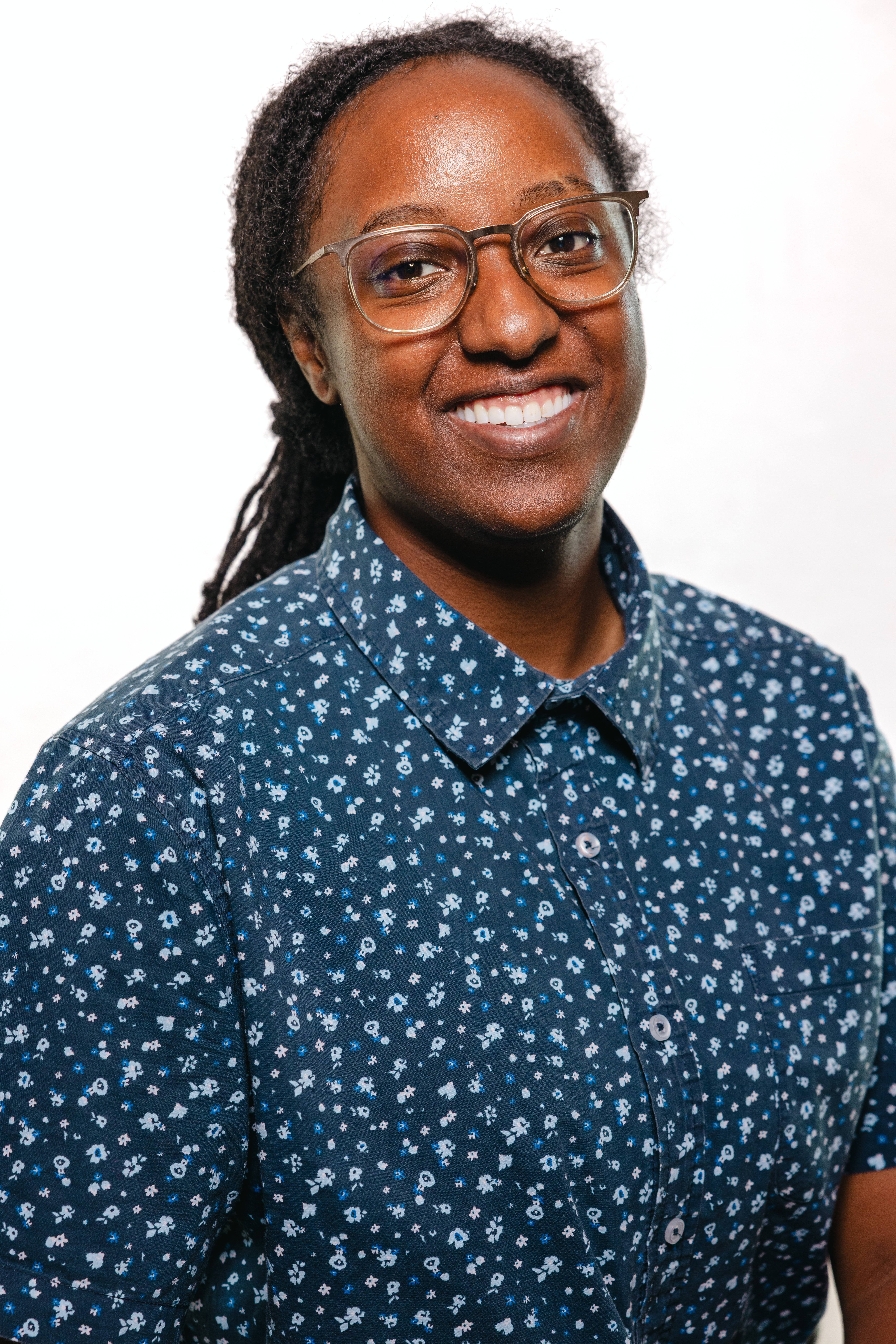
Natesha Mortimer
Founder & Data Scientist, Data Swale
Natesha Mortimer is the founder of Data Swale and a data scientist, analytics strategist, and community-focused technology leader passionate about helping businesses scale through smarter data-driven decision-making. She works at the intersection of data strategy, analytics, operations, and technology, helping organizations identify gaps, strengthen decision infrastructure, and turn complex information into actionable insights. Currently completing her Master's in Computational Data Analytics at Georgia Tech, Natesha also graduated Magna Cum Laude from UCF with a BSBA in Finance. Her background spans utility digitization, anti-money laundering operations, and complex financial derivative portfolios across global teams at one of the world's largest asset management institutions. Known as the "Community Data Scientist," she leads workshops and hands-on tech events to make data, AI, and technology more approachable, especially for women and underrepresented communities entering tech and business.
Show full transcript
Joanne Skiles[00:00]
Hi everybody, welcome back to Her Career Unplugged, where we unplug from our polished LinkedIn version of life and talk about what are the actual real gritty stories behind our careers, the confidence, the ambition, and really honestly how we're figuring it all out as we go, just like how I'm finishing this sentence. So today's episode is going to be a really fun one. I'm joined by Natesha Mortimer. She's an entrepreneur. She is in Georgia Tech right now. She's a tech founder, someone who's building at the pace that most people only talk about. She's the founder and CEO of Data Swale, right? yeah. She's passionate about using
Natesha Mortimer[00:44]
Yep, you're right.
Joanne Skiles[00:47]
data and innovation to solve real problems. And honestly, she is representing the next generation of women in tech. They are smart, ambitious, have creativity and they're unapologetically themselves, which is the most important part. So we're talking startup life, building confidence in your 20s. I remember those years. Navigating tech spaces, lessons nobody teaches you after graduation. And the best part, a little bit of chaos in between. So thank you so much for joining us, Natesha.
Natesha Mortimer[01:22]
Thank you.
Joanne Skiles[01:23]
Honestly, at this point, I did the intro wonderfully, I might add. We did not have
Natesha Mortimer[01:30]
Good job.
Joanne Skiles[01:30]
a version before this. And I'm going to hand it over to my wonderful partner, Vimala, who is going to ask you many questions because we want to know a lot about you. And I'm sure our listeners do too. So Vimala, take it away.
Vimala Pydi[01:46]
Thank you, Joanne, and welcome, Natesha. Thank you for coming in as a guest. And we do have a few questions. We are very curious to learn about your journey, your company, how you started. So to begin with. One of my first questions that comes to mind is starting a company when you're in school, when you're in graduate school or under is kind of a different way than usually like when I was at school, I was thinking as my next step finding a job, right? So what was your journey like? Why being an entrepreneur? Why were you driving towards that? that.
Natesha Mortimer[02:30]
my journey was really messy. So I did have experience in the corporate world at a large Fortune 500 bank. during COVID, I think like most other people, they were craving something different, but also not only that. I've always been very interested in data, math and tech, and I saw things moving really quickly and I knew that, okay, I need to make a change, whether that be pivoting to a new career or a new company or whether it be entrepreneurship. So once I made the pivot outside of banking, I just, I kind of got swooped into entrepreneurship. I'd been going to entrepreneurship meetups prior to me pivoting out of banking I had a woman who mentioned like, hey, I might be interested in your help with data in a few months. I forgot about it, whatever. And then, you know, a few months later, she did reach back out. So after I pivoted out of that company, then I kind of got dragged into consulting and dragged into like helping startups with data analytics and things of that. nature but I've always been had like an entrepreneurial neural mindset but yeah that's kind of how the journey kind of found me really.
Vimala Pydi[03:55]
That's interesting. So it's more of like going to these meetups, having that network, working with some women in the industry. That's how you got started. Is that OK? Did you feel like you were ready when you were starting your company? Or was it like organic, as you just explained, working with a few people within the finance industry that led you to having your own company?
Natesha Mortimer[04:24]
I don't think I ever really felt ready for anything. It's always just like, it's always just getting thrown into something. I don't think I really felt ready, but I think what really drove me into like, okay, actually. like creating LLC is because after going through a lot of tech events and people constantly asking like, can you help me with this? Can you help me with that? I'm like, okay, now I actually should, you know, create a business around it if that's a need that I'm seeing. So yeah.
Vimala Pydi[04:54]
Nice. Yeah, that's a hey, hey, we have a takeaway for our audience here and podcast listeners. So start before you feel ready. Like sometimes we just
Natesha Mortimer[05:02]
Yeah.
Vimala Pydi[05:03]
want to see like, are we fully ready? We need to do the business plan. need to do this. The account is and stuff. But maybe you can start before you feel like you're fully ready. Right. That's a key point. we did have a networking conversation that Joanne and I did before where we were talking about going into community networking and get started there. So this is a really, really keen site for us and for our audience as well. Next question. We all are in social media. We see people like glamorizing entrepreneurship, like having their own company, like doing shots, reels, everything. What's your take? What do you feel? What's the reality between entrepreneurship and having your own company?
Natesha Mortimer[05:51]
Ooh, so I'd say that it's very different from what social media shows. As an entrepreneur and... a new entrepreneur, you're doing everything yourself. And I think a lot of times that's glamorized, like, be your own boss, make your own decisions. But in entrepreneurship, no, you're really making, you're doing everything. You are the accountant. You are the marketer. You are the person who has to network. And a small portion of that is assuming that you're not a marketer, assuming that That's not the core of your business. A small portion of your actual business is what you really like to do. So that's something that I don't think social media shows often enough, and everything else can be a bit glamorized.
Joanne Skiles[06:42]
Yeah, I love that point because
Vimala Pydi[06:42]
Yeah.
Joanne Skiles[06:45]
you have to do all the stuff you don't like along with the thing that you loved, but it becomes a small fraction. Do you feel that it's a little bit lonely in some ways?
Natesha Mortimer[06:58]
Ooh, so I guess in starting out, it can be a bit lonely. But I'd say that entrepreneurship, I think social media shows that, you know, as an entrepreneur, you are that one person with that special talent and you're making it by yourself. And in reality, it's not the case at all. You need a, you absolutely need a support system. You know, you might not have a team yet. You need that support system. You need mentors, you need friends, you need peers who are going through the same journey as you're, you're going through and you're not doing it alone. you, so in certain aspects it can be lonely because people don't understand the struggle who people who aren't in entrepreneurship, they don't understand the struggle. But outside of that, if you have people who understand the struggle, who are going through the struggle with you, it's a bit less lonely.
Vimala Pydi[07:55]
Yeah, like you spoke like a true data person on like the small part being the passion or whatever is driving you and the bigger part is all those segments. And also curious on what you said, like how does your village look like? What's your support system for, especially in terms of our listeners, if they're trying to build something new, what would their support system would look like? Where would they go, talk to people or whatever you're doing?
Natesha Mortimer[08:25]
I definitely looked out with this one because I started off in corporate. And during COVID, I really like stepped out of my comfort zone. And I started going to a lot of different panel discussions and like online, like employee resource, resource group meetings and things of that nature. And just showing my interest in people, people who were excelling in the corporate space and just. like connecting with them. those people end up being my mentors, my sponsors. And still to today, like I still have them in my circle, people who I can just genuinely talk to and who genuinely care and support me from not only like the career aspect, but just as a person who generally cares. So that's how I found some of my mentors and sponsors that I kept with me from corporate, but also How I found additional peers was going to community events, community tech events, not only online, but also very much in person, finding people who look like me, who have similar experiences, who have different experiences, different backgrounds, sets, and just really trying to connect with people other than let me network to get their LinkedIn, but people who generally having those connections. And that has helped me with my journey and that's what I consistently do. So not only do I have those people right now, I kept constantly I'm constantly going to community events and building that network of genuine people that we where we can support each other.
Vimala Pydi[10:02]
think that actually that's a great point even for whoever is starting new and want to get into this space. Quick question on like I know you're in Georgia Tech right now. Do you do networking events or any community building within that space within your college what's your take on if someone is starting right now and if they're in college? Do they go to their college events first? How do they find them?
Natesha Mortimer[10:33]
Yeah. So if someone's in college, it depends whether they're doing in-person or remote. So I'm personally doing remote for Georgia Tech for my master's in computational data analytics program. So networking looks a bit different, but Georgia Tech, we do have different online meetups that either happen monthly and sometimes yearly. So there's always ways to meet people with different backgrounds and the skill sets that you're interested in. And also we have a very like in-depth, like thought out Slack channel. So everyone's like, we have thousands of people in there that we have access to. So that's how I meet with and connect with my fellow Georgia Tech grad students. I'd say for undergrad or any in-person college students, I'd say if you're specifically looking for entrepreneurship or tech peer support, definitely specifically go to those events. Yes, go to the fun ones, parties and stuff, I guess, but definitely seek out those events, go online to your, I think it's called like student resource group Go to the webpage for those events, also meetup.com and eventbrite for everybody is also a good spot to find interesting tech and entrepreneurship events.
Vimala Pydi[12:08]
Yeah, that's a good one. College resources, meetup.com. And also like if there are any local networking events that are happening, if you're focused on tech, look for tech and entrepreneurs, right? Like that would be
Natesha Mortimer[12:22]
Yeah.
Vimala Pydi[12:23]
a good way to start as well. All right, so I'll pivot into another question on Joanne and I talking to lot of young professionals, professionals in general, right? They do struggle with imposter syndrome, especially when entering rooms with people who have decades of experience. Have you dealt with that? And how did you navigate through those?
Natesha Mortimer[12:49]
I say that, so if you're just listening to this podcast and not watching it, I'll just give you a quick description, paint a picture. I'm a young black female with locks. I'm basically, I'm experienced in tech, finance, entrepreneurship. I'm basically always in rooms with people who don't look like me, who have different experiences, who have varying expectations of me. So I'm continuously proving myself 10 times over. most the time subconsciously. So if I'm in a room of highly experienced people, it's because I absolutely deserve to be there and I'm smart enough and I'm capable and I've worked for it. So I don't give energy to imposter syndrome for myself. I know it's real and I just don't give energy to it because I know it doesn't benefit me to walk around and think that I'm not good enough when my track record says otherwise. so like even if you're facing imposter syndrome, just know that like it doesn't benefit you. And also even in scenarios where I don't know the subject matter that's being discussed, I know that I'm 100 % capable of learning it. So there's no stress to that. Like if you're dedicated to learning something, like, okay, be the newbie in the room. And people are open to like receiving that energy. yeah, that's my thoughts on imposter syndrome.
Vimala Pydi[14:14]
I love it, Natesha. Not giving into that energy and also if you don't know it, being open to learning it, right? Like especially now with we are at a rapid scale of a lot of AI in the market, especially in the tech space and non-tech space too. Having that learning hat and being there to kind of learn and quickly turn around and help others learn would definitely bring you in. On that note, any other questions?
Joanne Skiles[14:42]
I want to poke at one thing, what you said, which reminded me of a really good manager that I had once in my life, is that you've already earned your place there. so keep that confidence and know that you're in the room, you've earned your place in the room, you've gotten there. Don't let it hold you back.
Vimala Pydi[15:03]
Yeah, that's a great point Joanne. Yeah, going into that, like that's how you handle and get confident in those rooms. Any advice for women just entering tech or being an entrepreneur women getting into these spaces is hard to achieve. Any specific advice you have?
Natesha Mortimer[15:26]
I would say one, my advice to women entering tech, entrepreneurship, early career, one, find a support system. I know I already mentioned this, but it's super important. Find peers, find mentors, find even mentees so that you don't attempt to do the journey alone. It's hard and it's hard period. So why do it alone? Especially if you can find people who are eager to support you because people are out there eager to support you on your journey. And also, you can also be, you know, the support for other people as well, which is equally as important. But two, my advice would be just show up. Like go to that event that you're interested in that you don't know anything about. Reach out to that person who you feel is out of your league, start that project, and each day you have the power to essentially build out your own journey. For me, think about, I constantly think about there's a big flywheel in the back of my head or something like that. And it's slowly turning and turning. And it gets faster within time. And by showing up, eventually, the right people and the right opportunities come into my life and more and more of those opportunities and those people gravitate toward me and my flywheel speeds up faster and faster and faster. So that's kind of how I approach it. First you just got to show up. You don't have to be great at something. You don't have to even know about the subject. Just show up. That's honestly half the battle, which I think some people are just scared to do.
Vimala Pydi[17:02]
That's amazing. I love the visualization of the flywheel and how we can get supporters, mentors as we get them. We can kind of speed up the journey. great visualization. All right. I'm going to go into the last question before we have rapid fire, you spoke a lot about. community building, showing up, going into these events. I know that takes a lot of time and energy. You have your own company, you're studying, you need to balance out your personal time, but going into these meetups. How do you avoid burnout and also stay grounded while chasing goals, right? how do you do that?
Natesha Mortimer[17:46]
Good question. That's something that I might need your help on. So that's something I'm actively working on. I would say one... Having an agenda and keeping track of my priorities, but not just career wise. I'm making sure that I'm intentional about social. I actually draw a triangle on my agenda. it's like social health and career or accomplishments. So balancing those three things out so that I'm not just like, I go a couple of days just focusing on accomplishments and career and things of that nature, I know I'll start feeling off balance. And now I'm like, okay, my triangle, need more things under social, connecting with friends. I need more things under health, mental health, physical health. I need to add in a walk. I need to journal more or meditate. So that's one thing that helps me with trying to avoid burnout. But also I would say listen to myself and be flexible. if I feel, even if it's not on my agenda to take a walk or even if it's not on my agenda to, go visit friends. I have to listen to myself and be flexible and realize, okay, my social battery is draining. My focus is draining. I need to take a step back and do something for me. So even if it's not on my agenda, this weekend I'm doing this because I need to. To keep myself grounded. And I no longer can just grit through situations because it doesn't help me in the long term. So that's how I attempt to avoid burnout and stay grounded while being super ambitious.
Vimala Pydi[19:33]
I love the flywheel Showing up is important to you loved how you give the data on like passion is one part But you have like this additional ones as you're being an entrepreneur and last but not the least the pyramid I really not the pyramid the triangle in my mind
Natesha Mortimer[19:51]
Yeah.
Vimala Pydi[19:52]
thinking pyramid but the triangle create your agenda and also be flexible. So thank you so much on giving us really good takeaways for whoever is listening, trying to like start a company or get your step into being an entrepreneur. Definitely follow those. All right, with that, Joanne, take it away for rapid fire.
Joanne Skiles[20:17]
So warning here, we're starting rapid fire means answer quickly. You talked a lot about opportunities. Does every opportunity look like an opportunity?
Natesha Mortimer[20:28]
No.
Joanne Skiles[20:29]
I feel like it was a trick question, but
Vimala Pydi[20:30]
So.
Natesha Mortimer[20:31]
You
Joanne Skiles[20:32]
I wanted to make sure that we touched on that. Not every opportunity looks like an opportunity. What's your most used app this week?
Natesha Mortimer[20:38]
VS code.
Joanne Skiles[20:40]
Yes, Good. Yes. I like it. Girl after my heart. What's a what's one word to describe your working style?
Natesha Mortimer[20:49]
Direct.
Joanne Skiles[20:52]
What one thing people glamorize too much
Vimala Pydi[20:53]
yeah, yeah.
Joanne Skiles[20:55]
about entrepreneurship?
Natesha Mortimer[20:57]
The initial freedom that you get of being your own boss. Yep.
Joanne Skiles[21:02]
What's the most random skill that actually helps you in a business?
Natesha Mortimer[21:06]
knowing how to intro people, like getting to know people's interests and or needs and introducing them to someone else or introducing them to a resource to help them.
Joanne Skiles[21:17]
I love it. Yes. If you were not doing what you are doing right now, what would your alternate life be?
Natesha Mortimer[21:25]
Ooh. I'd be some sort of sustainable agricultural community developer. Instead of a regular community developer, it'd just be sustainable communities, food, forest, gardening, rainwater catchment, the whole hippie life.
Joanne Skiles[21:45]
Most underrated career skill.
Natesha Mortimer[21:48]
Genuine relationship building, I'd say, yeah.
Joanne Skiles[21:54]
All right. coffee, tea, or energy drinks.
Natesha Mortimer[22:01]
D, juice, homemade juice. I don't like coffee
Joanne Skiles[22:03]
me juice. yeah.
Natesha Mortimer[22:05]
or tea really, but yeah, homemade juice.
Joanne Skiles[22:09]
You're juice girl, okay. All right, one last question. What's one thing you wish more young women believed about themselves?
Natesha Mortimer[22:16]
Ooh, that they're capable. Like you have the power to do anything you truly desire. So if you truly desire it, it's going to happen. Just you have to, be calm in order to be, so you're capable of doing anything. Yeah.
Joanne Skiles[22:32]
This was such a fun conversation. I'm going to be honest
Vimala Pydi[22:34]
Yeah.
Natesha Mortimer[22:35]
Yeah.
Joanne Skiles[22:36]
with you. I think you just got a new fangirl.
Natesha Mortimer[22:40]
Nice.
Joanne Skiles[22:41]
Everything you said like hit right into my soul. So I loved it. And I just I love how just you, you are. And I think that's really important and ambitious and something I hope everybody else understands that you don't have to be anybody. You just have to be yourself. And it's great. So I think a lot of listeners will really appreciate your point of view. And I honestly can't wait to see what you're going to do.
Natesha Mortimer[23:17]
Me either. I'm
Joanne Skiles[23:18]
Yeah.
Natesha Mortimer[23:18]
excited too.
Vimala Pydi[23:19]
I'm looking forward to everything that you're going to accomplish for sure and plus one on everything Joanne said.
Natesha Mortimer[23:29]
Thank you.
Joanne Skiles[23:29]
But with that, I think we are wrapping up the conversation and I want to thank everybody that has listened so far. I hope you understand there's a lot of things that have been added to your playbook. But most of all, know that you earned your space in the room Natesha, you created this triangle to fill your important buckets. And everybody's going to have a different way. And maybe the triangle is not going to be that perfect equal triangle, right? Depending on what you like. But it is important to fill all your needs and understand that your needs do fluctuate. And that's OK, too. We are human. Which is something that I was making fun about myself before we started this podcast, because I totally screwed up in the beginning, because I am human and to make mistakes is human. So thank you all so much for listening and remember stay curious, stay bold, and stay unplugged.
Vimala Pydi[24:27]
Thank you.